
Air-Pot containers use a unique wall structure that triggers a natural response in tree roots called air pruning.
When a root reaches the wall of the container, the tip is naturally pruned by exposure to air. Instead of circling around the pot, the plant responds by producing many new branching roots behind the tip.
Over time this creates a dense, fibrous root system that fills the entire container.
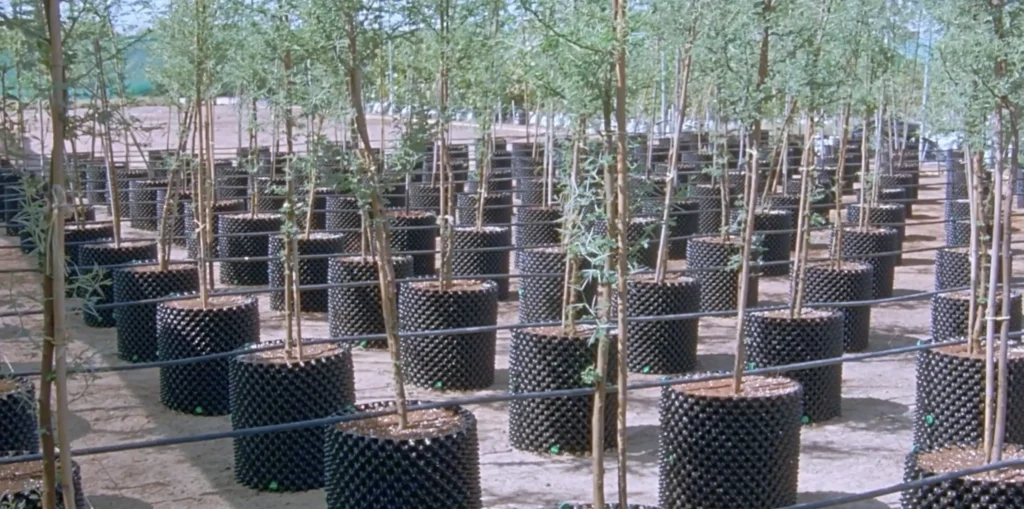
This has several major advantages:
• No circling roots
• No girdling roots
• No root loss during transplanting
• Faster establishment after planting
Traditional plastic pots often produce circular roots that eventually strangle the tree years later.
Even worse, ball-and-burlap harvesting cuts away large structural roots, forcing trees to struggle for years while rebuilding their root systems.
Air-Pot grown trees avoid these problems entirely.
Faster Growth, Healthier Trees
The high oxygen levels in Air-Pot containers promote extremely vigorous root development.
Trees grown this way often show:
• 40–60% faster growth
• stronger root systems
• better drought tolerance
• fewer pest and disease issues
Industrial nursery trees are usually grown in dense clay soils that are convenient for mechanical harvesting but far from ideal for forest species that prefer well-drained soils.
Air-Pot trees grow in high-quality container soil with excellent drainage and oxygen availability, giving them a huge advantage once planted.
There is an old saying about newly planted trees:
First they sleep, then they creep, then they leap.
The trees I have been growing skip the first two steps—they leap right out of the gate.
Just look at the root systems and it’s obvious why.