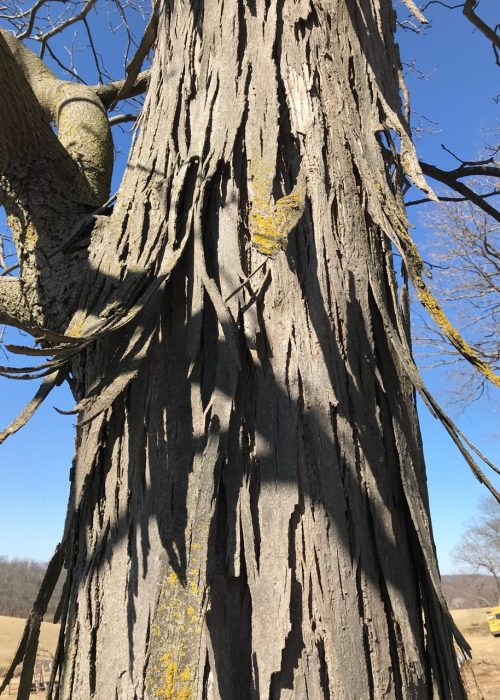
Of all North American hardwoods, the White Oak (Quercus alba) may be the most generous to life. Its wide, sheltering crown supports hundreds of species—warblers, woodpeckers, squirrels, and pollinators all find sustenance and sanctuary within its branches. The acorns it produces in steady abundance are nutrient-rich anchors of the food web, feeding deer, turkeys, bears, and countless small mammals through lean seasons. Even in death, a fallen White Oak continues to serve, offering cavities for nesting, bark for overwintering insects, and decaying wood that nourishes fungi and replenishes forest soils.
The ecological reach of Quercus alba extends far beyond the visible. Its sturdy limbs cradle epiphytic lichens and mosses; its leaves harbor caterpillars of hundreds of butterfly and moth species that, in turn, feed migratory birds. Few trees equal it as a foundational species, one that quietly weaves stability, fertility, and biodiversity into the very fabric of eastern forests. To behold a mature White Oak is to witness a living ecosystem—one that gives more to wildlife than almost any other tree in its realm.
Scientific Name: Quercus alba (white oak).
Hardiness Zone: 3–9.
Sun Exposure needs: Full sun (tolerates light partial shade when young).
Soil Type preference: Rich, moist, well‑drained acidic loams ideal; adaptable to clay, loam, or sand with moderate drought tolerance once established.
Growth Rate: Slow to moderate.
Height and Width at maturity: Typically 50–80 ft tall and 50–80 ft wide; exceptional trees can reach 80–100+ ft tall with similar spread.
Flower Type: Monoecious; separate male and female flowers. Male flowers are yellow‑green catkins, female flowers small reddish spikes in spring; both are inconspicuous.
Fall Color: Attractive red to wine‑purple, sometimes mixed with bronze or orange, and often long‑lasting on the tree.