

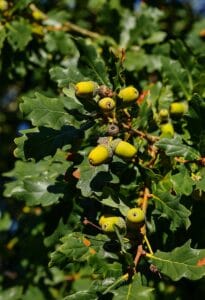
Swamp white oak (Quercus bicolor) is a keystone wildlife tree for New England’s wetter landscapes, especially along lowland rivers, pond margins, and seasonally flooded flats. Its sweet acorns are heavily used by local mammals such as white‑tailed deer, gray and red squirrel, eastern chipmunk, beaver, and black bear, as well as wild turkey, wood duck, mallard, and other dabbling ducks that forage along flooded bottoms. Ruffed grouse, blue jay, and a variety of woodland songbirds cache and consume the mast, tying this oak directly into the region’s fall and winter food webs.
The foliage and twigs of swamp white oak host the caterpillars of numerous New England moths and butterflies, which in turn feed breeding and migratory birds such as warblers, vireos, chickadees, and flycatchers that glean and hawk insects in its canopy. Its furrowed bark and sturdy limbs provide roosts and foraging surfaces for woodpeckers, nuthatches, brown creepers, and bats, while cavities in older trees offer denning and nesting sites for raccoons, squirrels, Wood Duck, Hooded Merganser, and various cavity‑nesting songbirds and owls. In floodplain forests, wet pastures, and restoration plantings, a mature swamp white oak becomes a multi‑tiered habitat structure, concentrating New England wildlife from soil invertebrates to top predators around a single, enduring tree.
Scientific Name: Quercus bicolor (swamp white oak).
Hardiness Zone: Approximately 3–8.
Sun Exposure needs: Full sun; tolerates light partial shade when young but best in full sun.
Soil Type preference: Moist to wet, well‑drained to periodically poorly drained soils; prefers acidic to neutral conditions and tolerates seasonal flooding better than many oaks.
Growth Rate: Moderate.
Height and Width at maturity: Typically about 50–60 ft tall and 40–60 ft wide with a broad, rounded to oval crown.
Flower Type: Monoecious; male flowers in drooping yellow‑green catkins and female flowers in small, inconspicuous spikes in spring, followed by acorns on conspicuously long stalks.
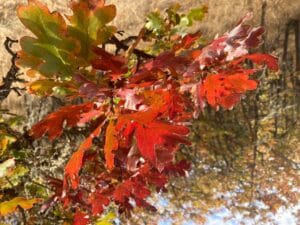
Fall Color: Yellow to yellow‑brown, often with bronze to occasional red‑purple tones