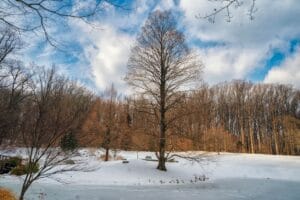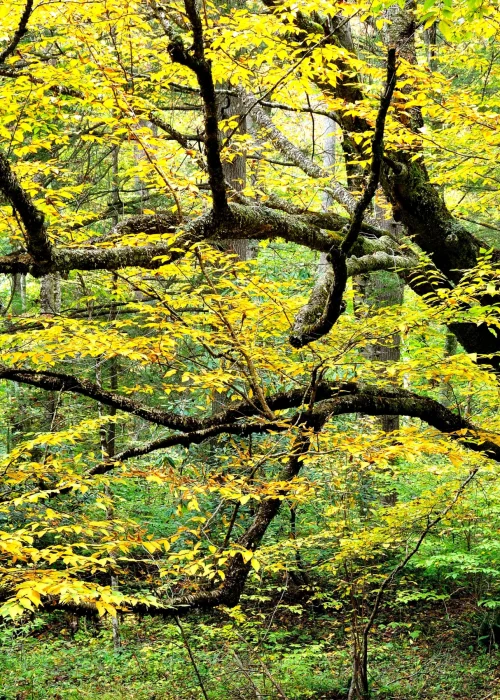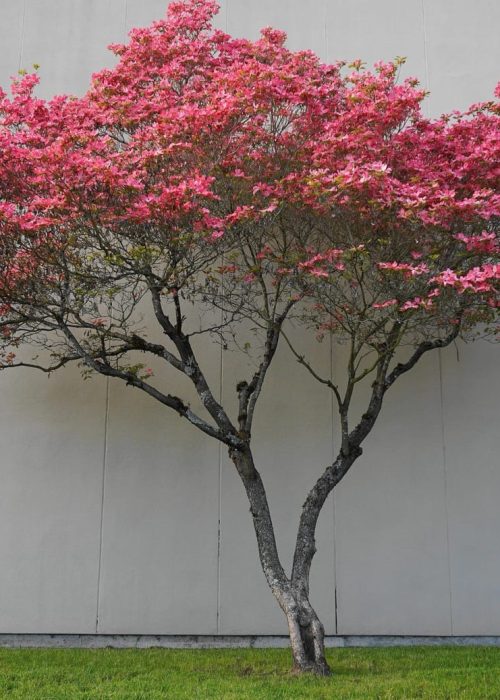


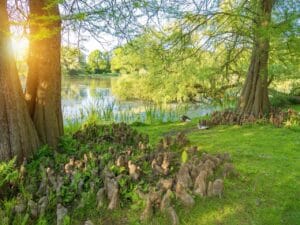
Bald cypress (Taxodium distichum) brings a dramatic, almost primeval character to Massachusetts landscapes, pairing striking beauty with serious toughness. This stately, deciduous conifer thrives where many trees struggle: in wet, heavy, or periodically flooded soils, along pond and stream edges, and in stormwater basins that swing from soggy to dry. Its fluted trunk, buttressed base, and soft, feathery foliage that turns warm copper in fall make it a four‑season focal point for parks, campuses, large yards,
and commercial sites alike.
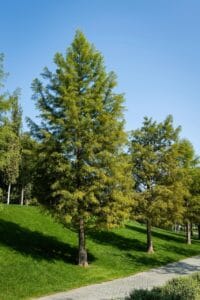
For designers, municipalities, and landowners planning for a wetter, more unpredictable climate, bald cypress offers a rare combination of longevity, wind firmness, and flood tolerance in a tree that still performs well in typical, non‑wet urban soils once established. It helps slow and absorb stormwater, stabilize shorelines, cast cooling shade, and create perching, roosting, and foraging structure for birds and other wildlife—all while remaining largely pest‑free and low‑maintenance. As a specimen, in a grove, or integrated into green infrastructure, bald cypress is a forward‑looking choice for Massachusetts projects that demand resilience, character, and ecological function in one impressive tree.
Scientific Name: Taxodium distichum (bald cypress).
Hardiness Zone: About 4–9 in cultivation.
Sun Exposure needs: Full sun; tolerates light shade but performs and colors best in full sun.
Soil Type preference: Moist to wet, acidic to slightly acidic soils; highly tolerant of periodic flooding and saturated conditions but also adaptable to average, reasonably well‑drained soils once established.
Growth Rate: Medium.
Height and Width at maturity: Commonly 50–70 ft tall and about 20–40 ft wide; older trees can be larger in ideal swamp conditions.
Flower Type: Monoecious conifer; male flowers in drooping catkin‑like clusters and female flowers as small cones, both inconspicuous, followed by rounded woody cones.
Fall Color: Soft needles turn yellow‑brown to russet or cinnamon‑orange before dropping.