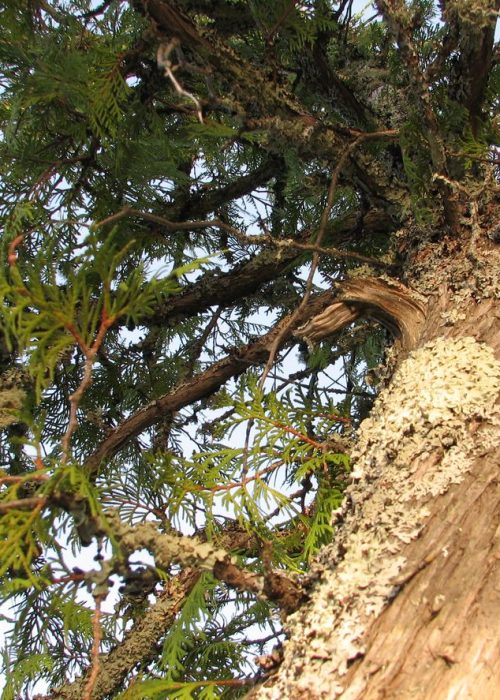
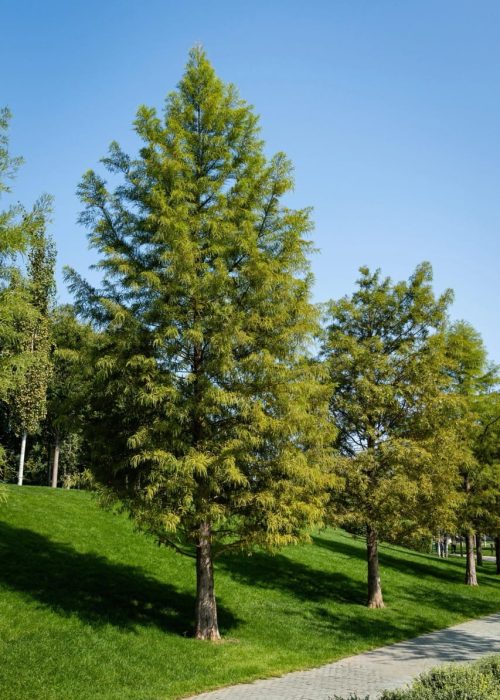
Eastern white pine (Pinus strobus) is a signature New England evergreen that delivers both iconic scenery and serious habitat value. Its tall, straight trunk and soft, blue‑green needles create a graceful, fast‑growing screen or backdrop, ideal for framing views, sheltering homes from wind, and tying new plantings into the regional forest character. The long, soft needles and irregular, layered crowns read as “classic New England” from a distance, making white pine a natural choice for larger properties, restoration plantings, and any project seeking a strong sense of place.
For wildlife‑focused designs, white pine is a cornerstone species. Its seeds feed red and gray squirrels, chipmunks, crossbills, finches, and a variety of other seed‑eating birds, while the dense branches provide critical year‑round cover and nesting sites for songbirds, owls, and hawks. As trees mature, broken tops and dead limbs create cavities and perches, turning older pines into high‑value nesting and roosting structures. In mixed groves with hardwoods, white pine adds winter shelter, vertical diversity, and reliable food resources—making it an excellent, low‑maintenance anchor for wildlife‑friendly landscapes across Massachusetts.
Scientific Name: Pinus strobus (eastern white pine).
Hardiness Zone: 3–8 (most commonly listed as hardy through cold zone 3 and into 8).
Sun Exposure needs: Full sun; tolerates light partial shade, especially when young, but best growth and form in full sun.
Soil Type preference: Moist, well‑drained sandy or loamy soils; adaptable to a range of textures, but dislikes heavy compaction, high pH, and very wet or very dry extremes.
Growth Rate: Fast when young, slowing to moderate with age.
Height and Width at maturity: Commonly 80—100+ ft tall and 20–40 ft wide
Flower Type: Monoecious conifer; yellowish male pollen cones and small, green to reddish female cones in spring, maturing into elongated brown cones.
Fall Color: Evergreen.