About Hopewell Native Tree Farm in Massachusetts
Hopewell Native tree farm Massachusetts, is a tree and shrub nursery, food forest, and ecological education project in Littleton, Massachusetts, where we are ‘Growing the Ancient Trees of the Future’. As a native tree farm in Massachusetts, we focus on the native trees that once shaped this region’s forests and fields, along with fruits, nuts, and tree-based foods that can sustain both land and community in a changing climate.
We look back to the landscape before its present state of degradation, drawing on Indigenous ecological principles, natural history, and the resilience of native species. Our work at this native tree farm in Massachusetts weaves together ancestral knowledge, modern science, and community connection to nurture a hopeful civilization rooted in care, balance, and regeneration.
At Hopewell, trees are more than plants. They are sources of food, teachers, connectors, and living bridges that reconnect people to the land—and, at our native tree farm Massachusetts, we hope they will stand for generations to come.

Native tree farm Massachusetts
About Hopewell Native Tree Farm in Massachusetts
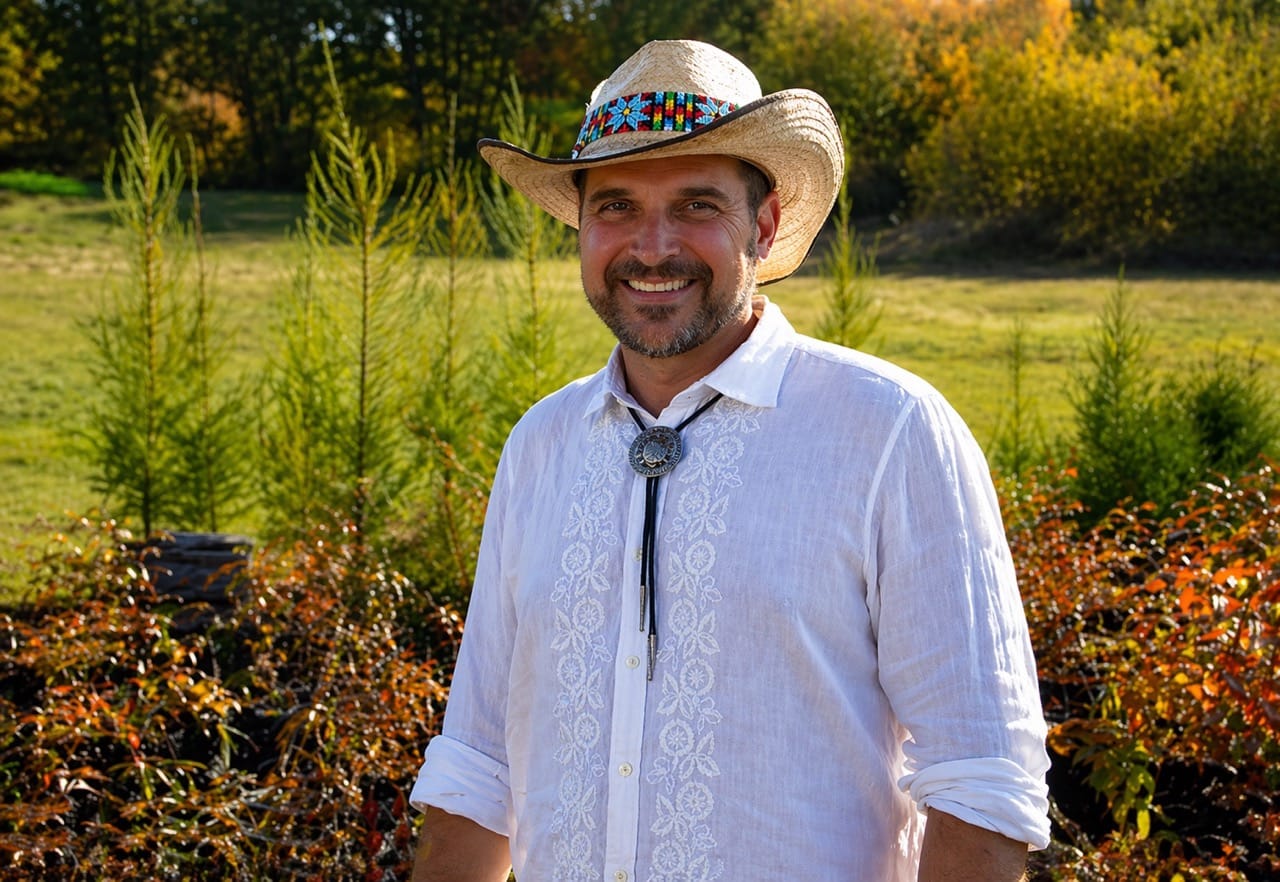
Jonathan
Bransfield
The co-founder of Hopewell Native Tree Farm and the owner of Bransfield Tree Company, a residential tree care firm based in Massachusetts.
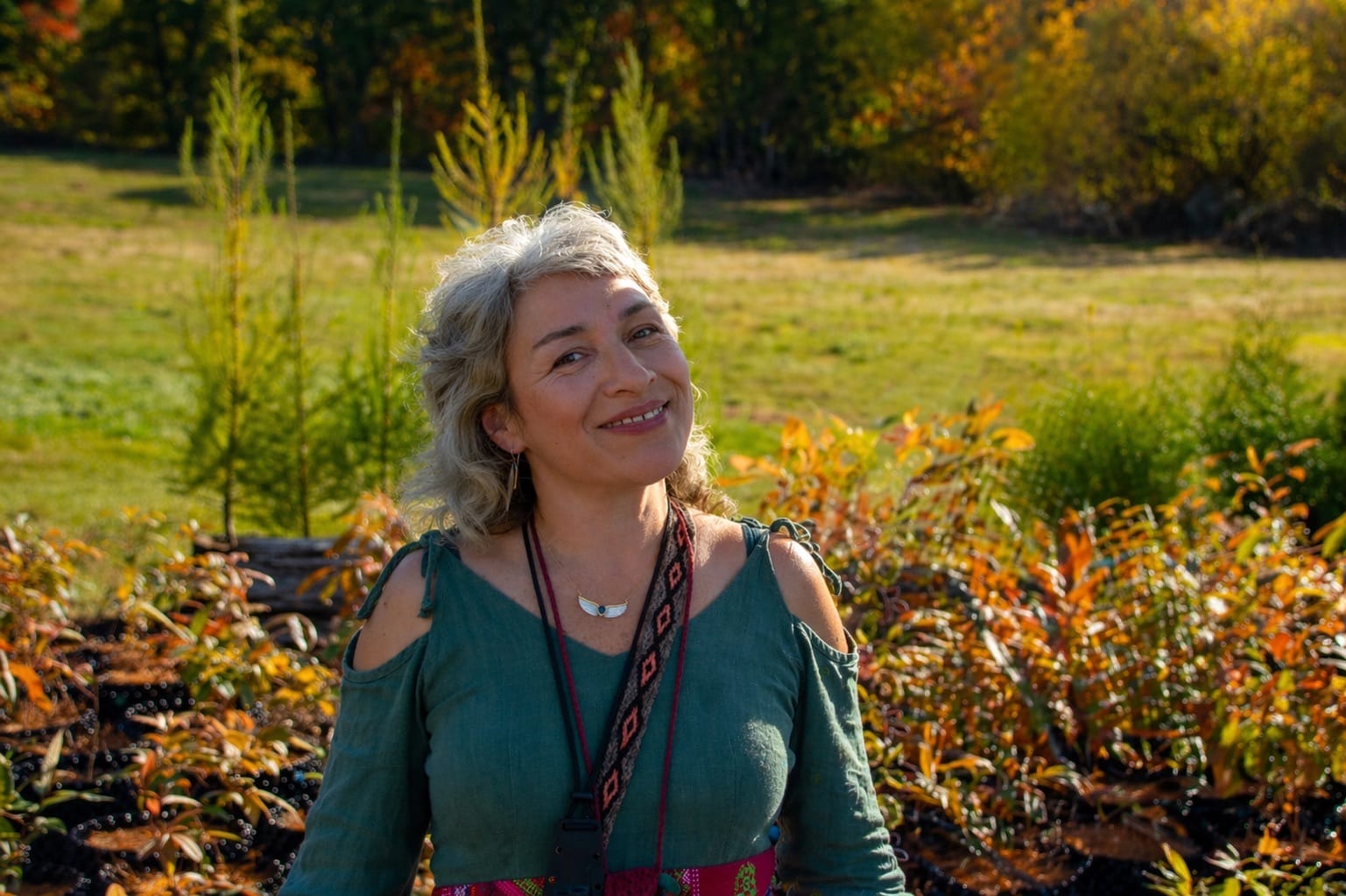
Volga Bo
Volga Bo (Bolotovsky) is an earth lover, wellness facilitator, and community builder devoted to conscious living and environmental stewardship. At Hopewell Trees Farm, she supports marketing, website development, social media, and creative vision while helping cultivate a nature-rooted, globally connected community.
Want to join?
Our Mission
Growing the Ancient Trees of the Future
Hopewell Native Tree Farm is a native tree farm in Massachusetts raising resilient native trees and shrubs with superior root systems. As a leading native tree farm in Massachusetts, we use air-pruning containers and other root-friendly methods to grow dense, fibrous roots that help our trees establish quickly, resist drought, and build healthier canopies—trees that restore soil, support wildlife, and anchor living landscapes for decades.
As a mission-driven native tree farm in Massachusetts, we are also planting a low-input, climate-appropriate fruit and nut food forest to support local food security. Through on-farm workshops and hands-on learning, we invite our community into the work of regeneration and help people reconnect with the land and with one another at our native tree farm Massachusetts.
Native Tree Farm in Massachusetts


Hopewell Native Tree Farm was born from a simple, powerful question: What would it look like if the land was truly healed—and not just managed?


On a quiet stretch of historic orchard land in Littleton, Massachusetts, our native tree farm in Massachusetts is reimagining what a tree farm can be. The old apple rows that once struggled with heavy chemical use and disease are giving way to a diverse food forest—and the harvests it can provide.
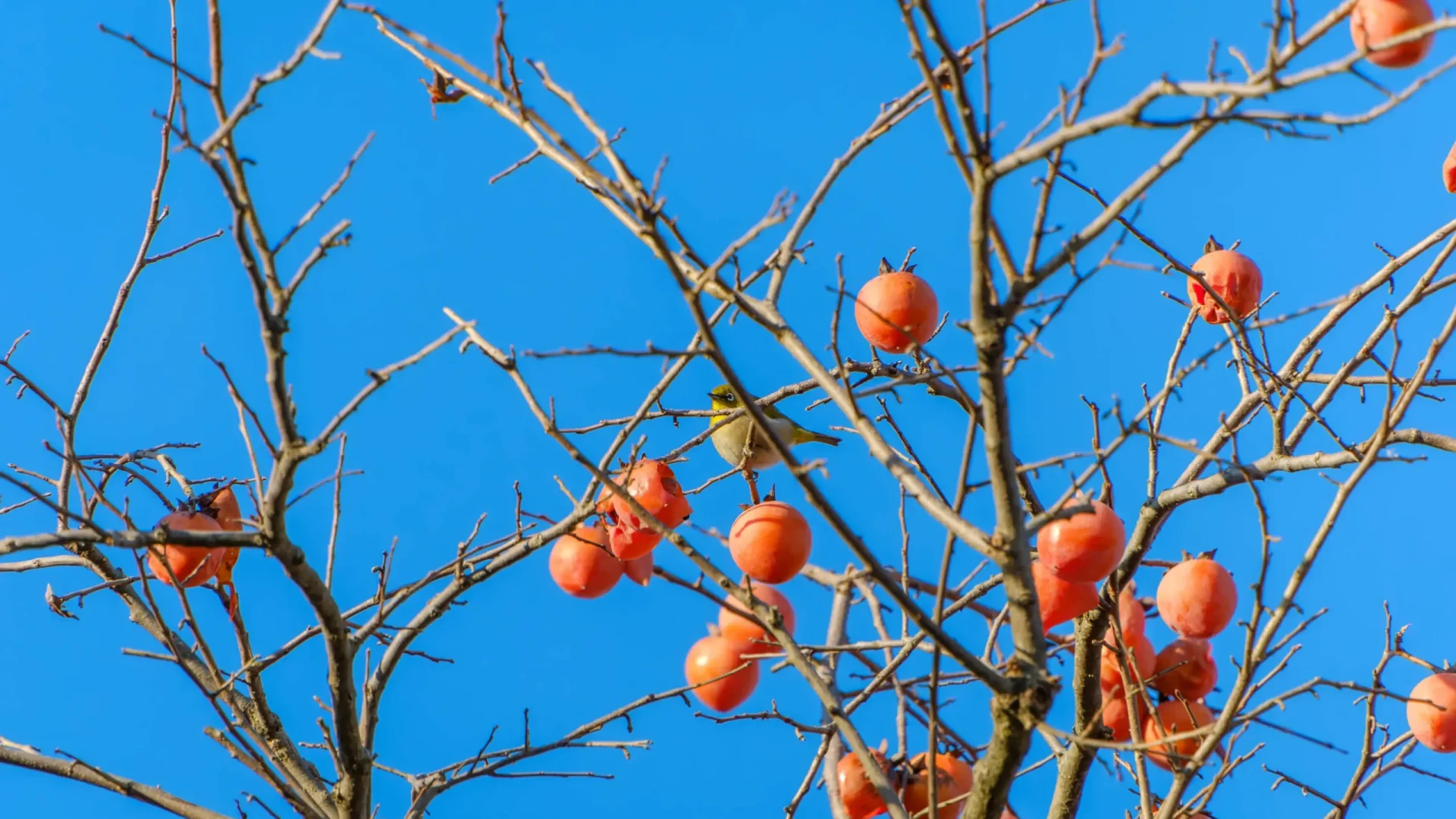
Oaks, persimmons, chestnuts, pawpaws, mulberries, and many other species are being planted with care and patience, guided by a long-term vision for ecological restoration and healthy harvests at our native tree farm Massachusetts.
Hopewell is a place where trees are grown and a place where connections are built—between soil and roots, people and plants, and the shared cycles of food and land, all rooted in our native tree farm in Massachusetts.
Hopewell Tree Farm honors the ancient Hopewell culture’s genius for shaping living landscapes that were both ecological and ceremonial, drawing on their precise earthworks, early farming, and wide-reaching exchange networks. As the Hopewell peoples aligned their great circles and octagons with the cycles of the sun and moon, revealing an intimate reading of place and a long-view mindset, Hopewell Native Tree Farm designs native plantings that move in step with New England’s natural rhythms, restoring soils, watersheds, and wildlife corridors over generations.
Just as Hopewell communities tended crops alongside wild foods in small settlements, this modern Hopewell cultivates and installs regional native trees to rebuild resilient, productive ecosystems where people actually live. And like the historic Hopewell exchange network that carried materials and ideas across vast distances, our work connects landowners, communities, and conservation partners into a living network of restoration sites, each new planting functioning as a contemporary earthwork quietly reweaving culture, ecology, and meaning back into the New England landscape.
purpose
Why Native Trees Matter?
Native trees are the foundation of healthy ecosystems. Unlike clonal ornamental trees, native species.
Support wildlife & food webs
Native trees provide habitat and food for hundreds of insects, birds, and mammals, sustaining resilient ecosystems.
Build resilient soils
Deep-rooted trees strengthen soil carbon systems, improving fertility and long-term ecosystem health.
Regulate water & temperature
Forests act as natural regulators, keeping the environment hydrated, balanced, and resilient to rising temperatures.
Fortify pollinators & natural food chains
By supporting pollinators and other wildlife, native trees ensure that the full network of plant- and tree-based foods can thrive.
Want to visit?
Contact us
Hopewell is located on historic orchard land now transitioning into a regenerative native tree farm. Instead of pesticide-intensive monocultures, our fields are returning to diverse, productive landscapes — where native trees, fruits, nuts, and tree-based foods grow together in harmony with the land.
Want to join?
Our sanctuary
Native trees are the foundation of healthy ecosystems. Unlike clonal ornamental production, native species provide:
Diverse wildlife habitat
Native forests and orchards that support birds, pollinators, mammals, and soil life — restoring food webs, biodiversity, and tree-based food sources across the landscape.
Carbon-sequestering plant communities
Diverse native plant systems that capture atmospheric carbon, rebuild soil health, strengthen long-term climate resilience, and produce fruits, nuts, and other nourishing tree-based foods.