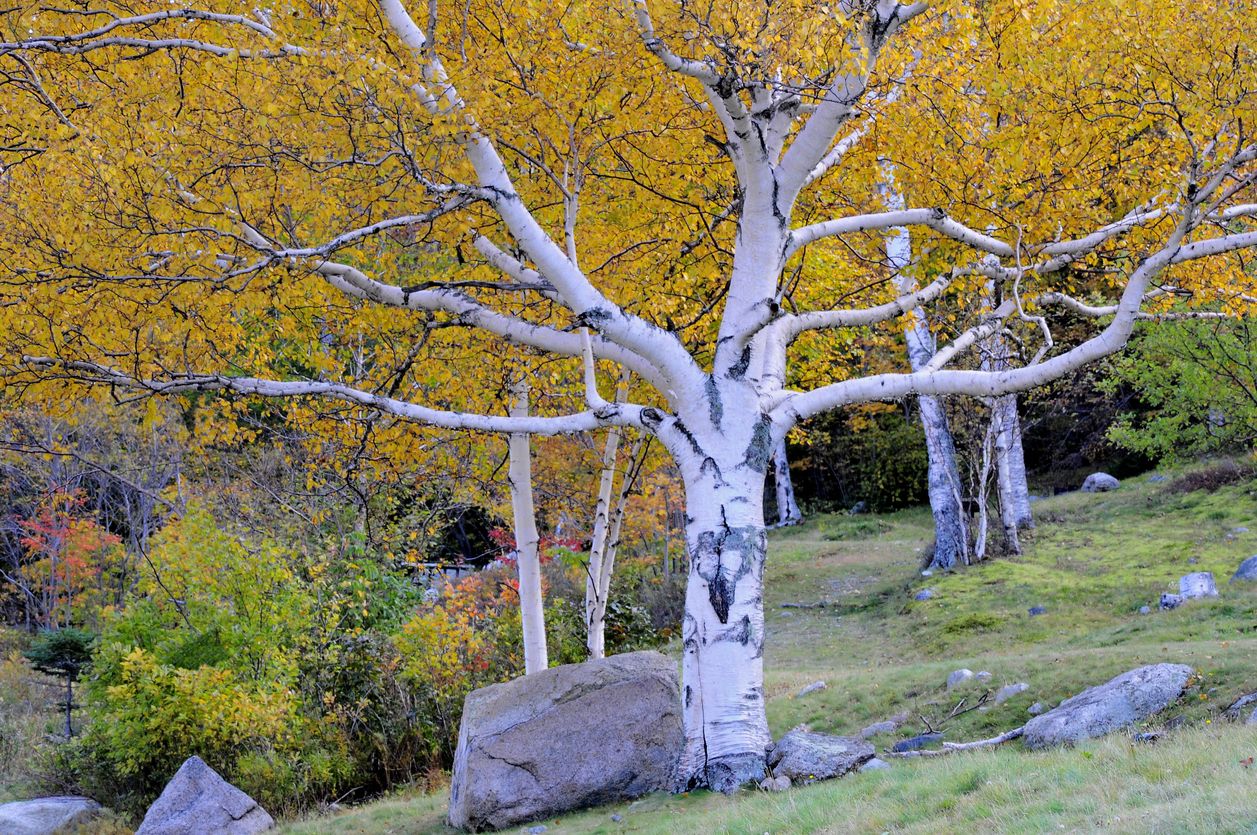
White Birch (Betula papyrifera), famous for its peeling white bark and delicate, fluttering leaves. Beyond its ornamental appeal, this native pioneer species plays a vital ecological role, quickly establishing on disturbed sites and enriching soils while supporting a diverse web of life. Its foliage serves as a host for numerous native Lepidoptera, including luna moth (Actias luna), mourning cloak (Nymphalis antiopa), and various dagger and prominent moth species, while its seeds provide food for birds such as chickadees, siskins, and ruffed grouse. The tree’s bark and structure offer shelter for small mammals and nesting birds, and its early successional habitat benefits pollinators and beneficial insects alike. Graceful yet resilient, white birch is an essential species for restoring native landscapes and fostering biodiversity.